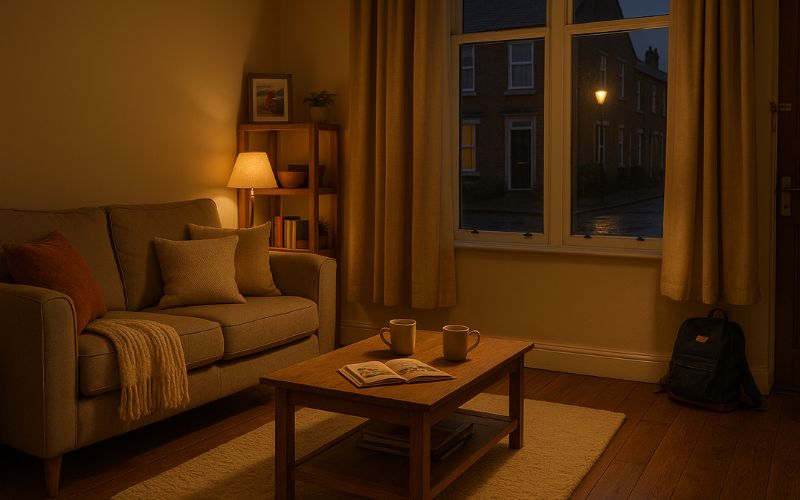
Why coziness matters in your first UK winter
Comfort as a survival skill, not a luxury
When you arrive from the United States, it is tempting to treat decor as something you will think about later. First visas, first school, first job, first rental, then eventually you will deal with cushions and lamps. In a UK winter, that order can backfire.
Short days, damp air, and the emotional weight of a big move all land at once. You find yourself coming home in the dark, taking off wet shoes in a narrow hallway, and trying to convince your children that this new life is going to be good. In that moment, the way your home looks and feels stops being a surface detail. It becomes one of the main tools you have to calm everyone’s nervous systems, including your own.
Coziness is not about perfection. It is about walking into your flat or house and feeling your shoulders drop instead of being tense. It is how your brain learns, “This place is safe, this is where my people are.” During your first UK winter, that feeling is worth planning for on purpose.
A different kind of home than most Americans expect
British homes are often smaller, more vertical, and more compartmentalised than many American ones. Radiators replace vents. Older windows and doors can bring character and drafts in equal measure. Hallways may be narrow, and storage may be limited. Your existing guide
https://www.movefromusatouk.com/uk-vs-usa-housing-differences/
explains these structural differences in depth.
When you read that guide and then step into your first UK rental, you begin to see why coziness needs its own strategy. You are not decorating a big open plan space with high ceilings and huge closets. You are creating warmth and comfort in rooms that may be oddly shaped, full of doors, and already furnished with someone else’s choices. That is a challenge, but it is also an invitation to be creative.
Comfort as part of your moving plan, not an afterthought
If you think of your move as only logistics, you end up with a shipment that arrives on time but a home that feels temporary and cold. If you think of it as a whole life transition, comfort becomes part of the plan. You ask different questions when you pack. Which blankets, photos, lamps, and everyday objects carry “home” for us. Which items should arrive first so we can settle quickly.
That is where your shipping planning comes in. Using the guidance at
https://www.movefromusatouk.com/shipping-household-goods-usa-to-uk/
and working with SDC, you can decide which comfort items must make it into the container and which can be replaced locally. The aim is not to ship everything. It is to ship the right things so that when you unlock your UK front door on a dark evening, you have what you need to make the space feel like your family’s, not just a landlord’s.
Seeing your UK home clearly, layouts, heating, and expectations
Understanding what the house is trying to do
Before you buy a single candle or cushion, it helps to understand how your UK home actually works. Radiators, not ducts, move heat through the space. Doors are often meant to be closed to keep warmth in specific rooms. Windows may be double glazed but still feel cooler than US standards. If you are renting, you may have restrictions on painting or major changes.
Walk through your home on a typical winter day. Notice which rooms feel warmest and which feel cool or unloved. Pay attention to where the light falls in the morning and in the late afternoon. Look for natural gathering spots, perhaps a corner of the living room where you can see the television and talk to someone in the kitchen, or a kitchen table that already feels like a natural homework station. These observations are the foundation for every cosy choice you make later.
Working with rented and possibly furnished spaces
Many American families start life in the UK in rented accommodation, sometimes furnished, sometimes partly furnished. Your guide
https://www.movefromusatouk.com/renting-furnished-unfurnished-uk/
explains the pros and cons of each option. From a comfort point of view, furnished homes can be a mixed blessing. You have somewhere to sit and sleep on day one, but you may not love the landlord’s sofa or the colour of the curtains.
Think of the existing furniture as the bones, not the finished picture. You may not be allowed to replace everything, but you can soften and personalise what is there. Throws and cushions can change the feel of a sofa you did not choose. A rug can make a cold laminate floor feel like somewhere you actually want to sit. A few framed photos on a wall or shelf can distract the eye from a paint colour that is not quite your style.
Matching your expectations to UK reality
It is easy to bring American expectations of space and comfort into a British house and feel disappointed. If you expect a giant family room with room for three couches and a huge tree, a typical terrace living room may feel cramped. If you expect every bedroom to hold a walk-in closet, you may struggle with small wardrobes and fewer drawers.
Adjusting does not mean lowering your standards. It means changing the questions you ask. Instead of “Is this as big as our old house,” try “Can this home hold our family’s favourite moments.” Is there a corner where you can read with a child. Is there space for a small table where you can eat together most nights. Can you picture coming in from the rain, hanging coats, and everyone finding a spot to exhale.
Once you start thinking like this, coziness stops being about square footage and becomes about how you use what you have.
Using what you learned while preparing for the move
If you have followed the moving preparation guidance at
https://www.movefromusatouk.com/moving-preparations-uk/
you will already have thought about what to bring and what to leave. Now that you are in the space, you can see whether your guesses were right. Perhaps the lamp you almost did not ship turns out to be the heart of your living room. Maybe you realise you need more storage baskets or that your American dining table really is too big for a British dining room.
This feedback is valuable, especially if your first UK home is not your forever home. You are learning how your taste and your family routines fit into UK spaces. The more clearly you see that, the easier it becomes to create a genuinely cosy home in this house and in any future houses you may move to in the UK.
Winter decor that works in smaller British spaces
Decorating for warmth without crowding every corner
Smaller British rooms can make American decorating instincts backfire. If you are used to spreading out in a large open plan living room, it is easy to overwhelm a UK sitting room with too many pieces. The goal in winter is not to fill every space. It is to choose a few strong cosy elements and let the room breathe around them.
Start with one focal point in each main room. In the living room, that might be the sofa and the wall behind it. In the kitchen, the table or breakfast bar. In a bedroom, the bed and the wall it rests on. Build your decor outward from that place instead of trying to treat every surface equally. A couple of well-chosen items, such as a framed print, a plant, and a lamp, will make a bigger impact than a dozen small objects scattered everywhere.
Using vertical space and corners
British homes often have surprisingly useful corners and alcoves. A narrow chimney breast might leave recesses on either side. A bay window can provide a little curved area that begs for a chair and a small table. These are perfect places to create cosy zones without stealing floor space from the main walkway.
You might turn one alcove into a reading nook with a small armchair, a floor lamp, and a basket of books. Another corner could hold a side table with a soft lamp and a tray for keys and mail, which keeps clutter from spreading across the whole room. When you treat corners as intentional cosy spots, the room feels designed rather than cramped.
Choosing colour that supports winter
When the world outside looks grey, the colours inside matter more. You do not have to repaint walls to change the mood. Cushions, blankets, lamp shades, and even smaller objects such as vases or plant pots can shift the palette.
Think about how different colours feel to your family. Warm tones such as deep reds, terracotta, mustard, and soft gold tend to make a room feel snug. Cool tones such as pale blues and greys can feel calming when balanced with warm lighting. You might use richer colours in the living room where you relax and gentler tones in bedrooms where you rest. The key is to be deliberate rather than letting whatever you happen to buy set the mood.
Making seasonal touches that do not overwhelm
Winter decor does not have to mean filling your home with themed items that need to be stored for the rest of the year. Small seasonal touches can be enough. A few evergreen branches in a vase, a cosy throw in a winter pattern, or a bowl of oranges on the table all signal the season without taking over.
If you enjoy holiday decorations, consider a simpler scheme than you might have used in a larger American home. A tree that fits the room, rather than one that dominates it. A few strings of lights concentrated in the places you spend most of your time. This approach keeps your home feeling calm and cosy rather than busy and cluttered, especially important when you are also dealing with unpacking and the emotions of a first UK winter.
Textiles, lighting, and little comforts that change how rooms feel
Why textiles are your secret winter tool
Textiles are the easiest way to add warmth to a British home. Radiators do the work of heating the air, but textiles change how your body experiences that heat. A rug on a cold floor, a thick blanket on a sofa, cushions that support your back, all help your muscles relax. For children, a soft rug or play mat can turn a chilly corner into a favourite spot.
You do not need expensive designer pieces. Focus on texture and feel. A mix of knits, woven fabrics, and soft cottons gives visual and physical comfort. In bedrooms, a good duvet that suits your family’s warmth preferences is worth prioritising early. Sleeping well makes every dark morning easier to face.
Using light to create a mood at different times of day
Lighting is the heart of a cosy UK home in winter. Overhead lights can be useful for cleaning or cooking, but they often feel harsh in the evening. Lamps, wall lights, and even carefully placed string lights are what create the atmosphere you are craving.
Think in layers. In the living room, you might have one main lamp near the sofa, a smaller lamp on a shelf, and maybe a gentle glow in a corner that stays on as a nightlight. In the kitchen, under cabinet lights or a small lamp away from the main cooking area can make late-night snacks feel inviting rather than clinical. In bedrooms, bedside lamps give each person control over their own patch of light, which can feel especially comforting for children in a new country.
Smell, sound, and the feeling of being held
Coziness is not only what you see. Smell and sound matter too. A home that smells faintly of something you recognise, maybe coffee in the morning or a favourite candle in the evening, quickly feels yours. Just be mindful of safety with candles and consider flameless options if you have young children or curious pets.
Soft background sound can also make a big difference to how winter evenings feel. That might be music you love, an audiobook playing while you cook, or the sound of a kettle boiling in the kitchen. These small sensory cues tell your brain, this place is alive and safe, not just a box filled with boxes.
Creating comfort points for each family member
Each person in your family needs at least one place in the home that feels like theirs. For a parent, that might be a particular corner of the sofa with a lamp and a blanket. For a child, it might be a reading nook on their bed with cushions and a soft toy. For a teenager, perhaps a desk with good lighting and headphones where they can do homework and connect with friends back in the United States.
Ask each person what would make their spot feel right to them. The answers might be small, a certain poster, a specific pillow, a hook for a favourite coat. When everyone has a defined comfort point, the whole home feels more harmonious. You are not just decorating a space. You are building a nest that can hold all of you while you adjust to a new country and a new kind of winter.
Family routines that make winter evenings feel safe and connected
Bringing structure back after the chaos of a move
When you first arrive in the UK, life can feel like nothing but logistics. Boxes, forms, appointments, new routes to school, new ways of paying bills. It is very easy for evenings to become an unstructured blur of screens and leftover tasks. In winter, that lack of structure hits harder, because the darkness outside already makes everything feel looser and less grounded.
Family routines are how you gently pull things back into shape. They do not need to be elaborate schedules. Think of them as small repeating patterns that tell everyone in the house, we know how our days work here. You might decide that everyone is home by a certain time when possible, that dinner happens at roughly the same hour, or that there is a short pause together after school before anyone disappears to rooms. Consistency matters more than perfection.
Simple rituals that anchor the day
Choose one routine for each part of the evening. After school or work, you could have a ten minute snack and chat at the table, just long enough to hear one thing that went well and one thing that was hard for each person. Before dinner, a child can help lay the table, even if you are eating something very simple. After dinner, you might have a shared activity on certain nights, perhaps a board game, a family show, or everyone reading in the same room for a short time.
These rituals are not about forcing togetherness. They are about giving your brain and your children’s brains a familiar ladder to climb every day. In a season when the light does not help you track time, routines do that job instead.
Protecting rest in a new time zone
Jet lag and school start times can complicate bedtimes in the first months. It is tempting to let everyone drift, especially if you are tired yourself. Yet winter feels much kinder when you get enough sleep. Set a rough bedtime for children and for yourselves and move toward it gradually rather than expecting instant adjustment.
Create a wind down pattern that signals the end of the day, perhaps a warm drink, dimmer lights, and a short conversation about tomorrow. Try to keep phones and laptops out of beds where possible, especially for teens who may already be using screens to stay in touch with friends in the United States. When rest becomes predictable, everything else, including the weather, feels more manageable.
Giving everyone some private time as well
Coziness is not only about togetherness. It is also about having a corner that belongs to you. Within your routines, build in a little protected solo time for each person. A parent might get fifteen minutes with a book after the kitchen is tidied. A child might have quiet drawing time before bed. A teenager might listen to music in their room after homework.
Talking about this openly helps. You can say, we are going to have half an hour all doing our own thing, then we will come back together for a snack or a show. That balance between closeness and breathing room keeps the home feeling calm rather than cramped during long winter evenings indoors.
Blending American traditions with British cosy culture
Letting your old traditions travel with you
One of the richest ways to create a cosy UK home is to bring your American traditions into it on purpose. You do not have to leave those rituals behind at the airport. If you always baked a certain cookie in December, do it here. If Sunday football was part of your winter rhythm, find a way to keep some version of that, perhaps recorded games or a new family movie time that scratches the same itch.
Children relax when they see familiar patterns appear in a new context. Adults do too. The food, music, and small customs you carry with you act as bridges between your old life and your new one. They say, our story did not end, it just moved location.
Saying yes to new British comforts
At the same time, you are now living in a country that has its own cosy culture. British winter comfort is full of small pleasures, a hot drink after walking in the cold, a simple pub meal with candles on the table, a quiet evening by the television with a blanket and a mug of tea. There is a reason people here talk so much about kettles.
You can treat these habits as discoveries rather than replacements. Try a proper Sunday roast at a local pub and see if it wants to join your family rhythm. Explore British baking with your kids on a rainy afternoon. Let everyone choose a favourite tea or hot chocolate and stock the cupboard with those things. As these new comforts settle in, your home stops feeling like an American island and starts feeling like a place that belongs in its surroundings.
Creating shared seasonal markers
Winter can feel endless if every week looks the same. Creating a few clear seasonal markers helps break it into manageable pieces. For example, you might mark the first evening when you light cosy lights or candles, a mid winter family day where you make a special meal, or a small celebration when the clocks change or the evenings noticeably lengthen.
These do not need to be big events. A favourite dessert, a walk in a nearby park, or a themed movie night can be enough. What matters is that you name the moments together. You give the season a shape and a story, which makes it feel less like a grey blur and more like a chapter in your family history.
Letting children help invent new traditions
Children are often full of creative ideas about what makes a home feel cosy. Ask them what they think would make winter evenings special in this new house. You might hear suggestions like pyjama movie nights, pancake dinners, or building a reading fort in the living room once a week.
You do not have to say yes to everything, but you can choose one or two ideas to adopt. When you do, your children see that this home is not just a grown-up project. It is a shared space they have helped design, both in decor and in rhythm. That sense of ownership makes adjustment easier, especially for kids who did not get to choose the move itself.
How SDC helps you bring the right pieces so you can focus on comfort
Choosing what to ship with coziness in mind
The way your UK home feels in winter depends partly on what you chose to bring. When you worked through your moving preparations and shipping decisions, you probably thought about cost and volume. Coziness adds another question. Which items make a space feel like ours almost as soon as they come out of the box.
This might include a particular armchair, the quilt your child sleeps under, the lamp that gives just the right light, the set of mugs everyone reaches for, or the rug that always sat in the middle of your old living room. SDC can help you plan your shipment so that these pieces are included and packed with care, rather than being left behind in favour of less meaningful items.
Timing delivery so comfort arrives when you do
A cosy plan is only useful if the right things arrive at roughly the right time. Winter is not the season when you want to spend weeks on bare floors with nothing but suitcases. Because SDC focuses on US to UK household moves, they understand how to schedule packing, shipping, and delivery so that your core household items, including those comfort anchors, reach your new home as soon as it is ready to receive them.
They can also help you identify which cartons should be loaded last and unloaded first, so that the very first boxes into your UK living room are the ones that hold bedding, lamps, and everyday kitchenware, not boxes of things you rarely use. That order can turn a cold empty rental into a liveable, welcoming home in a single day.
Reducing your mental load so you can pay attention to home life
Designing cosy spaces and gentle routines takes emotional energy. If your mind is full of customs codes, shipping updates, and worries about how to get a container down a narrow street, you have very little capacity left for pleasant tasks like choosing where the reading chair goes or which shelf should hold family photos.
By handling the complex parts of the move, SDC frees you to focus on the human parts. You can spend that time walking your new neighbourhood, figuring out how the light moves through your rooms, and listening when your children tell you what feels strange and what feels good about the new house. That attention is what turns a property into a home.
Letting your new home do its job
In the end, a cosy UK home is not about impressing anyone on social media. It is about creating a place that does its job, which is to hold your family kindly through a season of big change, especially during winter. If your rooms feel warm enough, your lighting feels gentle, your routines feel supportive, and each person has a corner that feels like theirs, the home is working.
SDC’s role in that story is to make sure you have the right pieces, at the right time, with the least possible stress, so you can focus on all the small, loving choices that bring comfort to life. When you look back on your first winters in the UK, you will remember the rain and the early sunsets, but you will also remember evenings on the sofa, children in warm pyjamas, and the growing sense that this house, in this country, has become your family’s place.