Last Updated: June 2026
SDC International Shipping is a licensed FMC moving company that specializes in relocations from the USA to the UK. One of the first questions families ask when they start planning an international move is how their belongings will actually get from their US home to their UK address. The answer involves a choice between two fundamentally different service models: door-to-door shipping, where a single company manages the entire journey, and port-to-port shipping, where you take responsibility for the legs on either side of the ocean crossing. Understanding what each model actually involves helps you make the right call for your move. For a broader overview of how moving to the UK works, our relocation guide covers the full picture.
| Factor | Door-to-door | Port-to-port |
|---|---|---|
| Pickup from US home | Included | Your responsibility |
| Packing | Included (if selected) | Your responsibility |
| UK customs clearance | Managed by SDC | Your responsibility |
| Final UK delivery | Included | Your responsibility |
| Best for | Full households, families, professionals | Small shipments, experienced shippers |
| Timeline predictability | High | Variable |
What Door-to-Door Shipping Actually Means
Door-to-door shipping is exactly what it sounds like: your belongings are collected from your US home and delivered to your UK address, with every stage in between managed by a single company. You don’t need to arrange separate providers for packing, freight, customs clearance, and final delivery. One team handles all of it, with one point of contact throughout.
In practice, a door-to-door move with SDC covers professional packing at your US home using international-grade materials, container loading and export documentation, ocean freight, UK customs clearance including ToR1 coordination, and final delivery to your new UK address. Optional services include specialty crating for fragile or high-value items, secure storage on either side of the Atlantic if your UK housing isn’t ready on arrival, and unpacking and debris removal at delivery.
The practical value of door-to-door goes beyond convenience. It means your shipment is documented consistently across every stage, your customs paperwork is prepared and submitted by people who do this daily, and any problems that arise, whether at the US port, during transit, or at UK customs, are handled by your moving company rather than landing on you. For families coordinating a major life transition, that single point of accountability matters significantly. Our international movers to the UK overview explains everything SDC coordinates on your behalf.
What Port-to-Port Shipping Actually Means
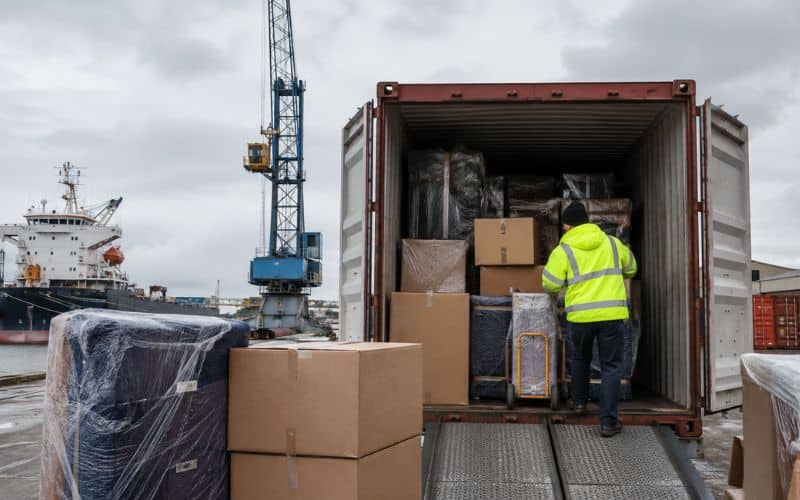
Port-to-port shipping covers only the ocean crossing. The freight company handles the transit between a US departure port and a UK arrival port, and you take responsibility for everything before and after that leg.
On the US side, that means packing your goods yourself or hiring a separate packer, transporting them to the departure port, and completing export documentation. On the UK side, it means clearing customs, paying any port storage fees if clearance takes time, arranging a separate inland delivery company to move your goods from the port to your address, and managing the delivery and setup yourself.
Port-to-port is a genuinely appropriate choice in specific circumstances: small shipments where the volume doesn’t justify a full door-to-door service, experienced international shippers who already understand UK customs requirements, or individuals with reliable contacts on the UK side who can manage the arrival end. For most American families relocating a full household, none of those conditions typically apply, which is why port-to-port more often than not costs more in time and stress than the upfront price difference suggests.
The Customs Difference: Why It Matters Most
UK customs clearance is the stage where the choice between door-to-door and port-to-port has the most practical consequences, and it’s the area where American families are least prepared to navigate independently.
With door-to-door shipping, SDC manages customs clearance as part of the service. That includes preparing a compliant inventory, submitting the Transfer of Residence ToR1 application before your shipment departs the US, coordinating with UK customs agents when the container arrives, and handling any follow-up queries from HMRC. Because the paperwork is prepared by people who complete it regularly, the chance of delays from missing or inconsistent documentation is significantly lower.
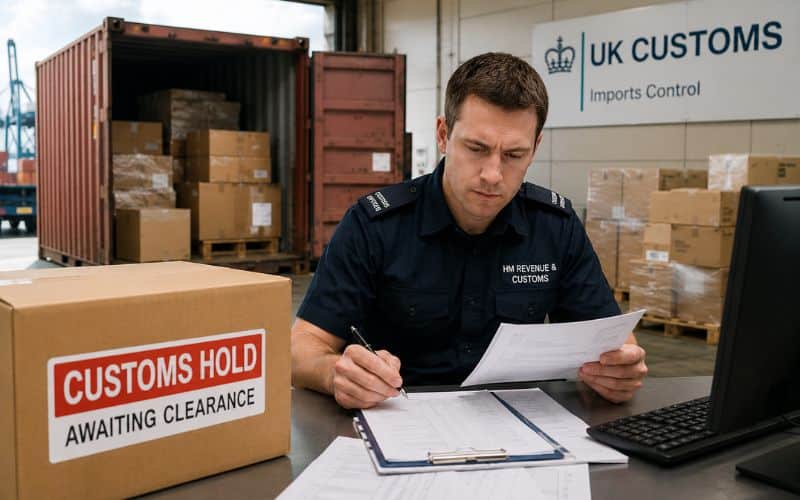
With port-to-port, customs clearance is entirely your responsibility. You need to prepare your own inventory to the standard UK customs requires, file the ToR1 application correctly and on time, and respond to any customs queries directly. If your shipment arrives at the UK port before your ToR1 is approved, or if there are gaps in your documentation, your goods may be held while the issues are resolved, and port storage fees accumulate daily. Hiring a UK customs broker to handle this independently is an option, but it adds cost and a separate coordination burden to an already complex process. Our UK customs forms guide covers what’s required regardless of which shipping model you use.
Cost: What the Real Comparison Looks Like
Port-to-port has a lower headline price, but that number reflects only the ocean freight leg. The full cost comparison requires adding everything port-to-port doesn’t include: transportation to the US departure port, separate packing services if you use them, a UK customs broker if you need one, inland UK delivery from the port to your address, and any port storage fees that accumulate if clearance is delayed.
When those costs are totaled, the gap between port-to-port and door-to-door narrows considerably for most full household moves. For smaller shipments where the additional services would be minimal, port-to-port can genuinely be more economical. For larger moves, the comparison is often closer than it appears, and the time and management burden of port-to-port rarely gets factored into the calculation the way it should.
The other cost consideration is insurance. Door-to-door moves with SDC can be covered under a comprehensive moving insurance policy that applies across the full journey. Port-to-port coverage tends to be limited to the ocean leg, leaving the US and UK ends either uninsured or requiring separate policies. Our UK moving insurance guide explains the options and what to look for. For a general sense of how international moves are priced, our moving costs guide covers what goes into a full-service quote.
Specialty Items and Situations That Affect the Choice
Certain items and circumstances make door-to-door the only practical option regardless of cost considerations.
If you’re shipping a vehicle alongside your household goods, door-to-door is the right model. Vehicles ship in containers alongside household goods and require coordinated documentation, custom loading and bracing, and ToR1 vehicle-specific paperwork that needs to be correctly linked to the main shipment. Attempting to manage that independently through a port-to-port arrangement introduces significant risk of customs problems.
High-value items including artwork, antiques, and instruments require professional crating and consistent chain-of-custody documentation for both customs and insurance purposes. SDC provides specialty crating and handles the documentation required for these items as part of the door-to-door service. Our artwork shipping and piano moving pages cover the specific handling involved.
Families moving with a firm deadline, such as a school enrollment date or a job start date that requires their household to be in place by a specific week, also benefit from the more predictable departure scheduling that door-to-door coordination provides compared to the variable timelines of a port-to-port arrangement.
How to Decide Which Is Right for Your Move
The clearest signal for door-to-door is a full household move: three bedrooms or more, a family, a firm timeline, or any combination of the above. The logistics complexity of coordinating packing, freight, customs, and delivery independently across an international move is rarely worth the cost difference for that scale of shipment.
Port-to-port is genuinely appropriate for small moves where the volume is minimal, the customs risk is low because the shipment is simple and well-documented, and the mover has either the experience or the UK-side contacts to handle the arrival end without significant effort or cost.
If you’re unsure which applies to your situation, the most useful thing you can do is have your inventory assessed before making a decision. The volume and nature of your shipment, your timeline, and your destination all affect which model makes more sense, and a conversation with our team will give you a clear recommendation rather than a general answer. Call us at (888) 909-3020 or visit our international movers to the UK overview to start planning.
Frequently Asked Questions
What is the difference between door-to-door and port-to-port shipping?
Door-to-door shipping covers the complete journey from your US home to your UK address, with a single company managing packing, freight, customs clearance, and final delivery. Port-to-port covers only the ocean crossing between ports, leaving you responsible for getting your goods to the departure port, clearing UK customs independently, and arranging inland delivery from the arrival port to your UK address. The core difference is who manages the complexity at each end of the move.
Is door-to-door shipping significantly more expensive than port-to-port?
The headline price of port-to-port is lower, but the full cost comparison requires adding transportation to the US port, separate packing if needed, a UK customs broker if you use one, inland UK delivery, and any port storage fees from delays. For full household moves, the total cost difference is often smaller than it initially appears, and the time and management burden of port-to-port rarely gets factored in as it should. For smaller shipments, port-to-port can genuinely be more economical.
Who handles UK customs clearance with door-to-door shipping?
With SDC’s door-to-door service, we manage UK customs clearance as part of the move. That includes preparing a compliant inventory, submitting the ToR1 Transfer of Residence application before your shipment departs the US, coordinating with UK customs agents on arrival, and handling any follow-up queries from HMRC. You don’t need to file paperwork independently or hire a separate customs broker. With port-to-port, customs clearance is your responsibility entirely.
Can I ship a vehicle with port-to-port service?
Shipping a vehicle alongside household goods requires coordinated customs documentation and custom container loading that is most reliably handled within a door-to-door arrangement. SDC ships vehicles in containers alongside household goods as part of the full-service move, not as standalone shipments. Attempting to ship a vehicle through a port-to-port arrangement introduces significant customs documentation risk that makes door-to-door the practical choice for anyone bringing a car.