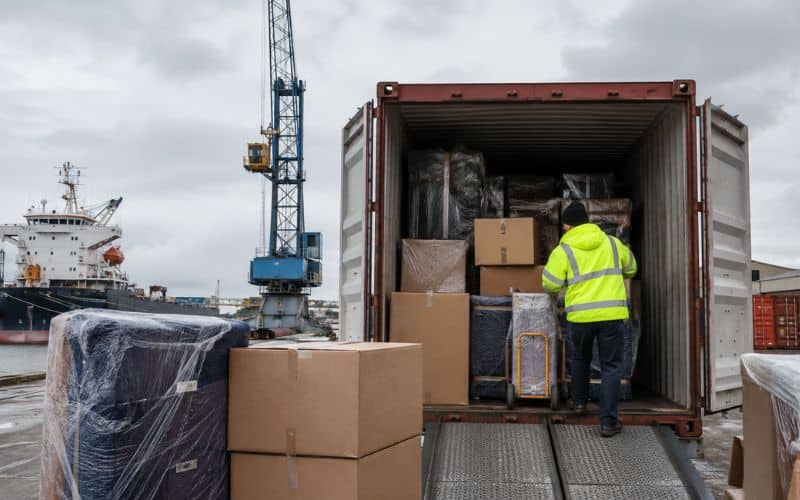
SDC International Shipping is a licensed FMC moving company that specializes in relocations from the USA to the UK, and Belfast is one of the destinations we help American families reach every year. If you’ve been researching a move to Northern Ireland’s capital, you already know there’s something different about this city, a creative energy, a genuine warmth, and a cost of living that makes the rest of the UK look expensive by comparison. What you might not know yet is how the logistics work, what the neighborhoods are really like, and what American families tend to discover once they arrive. This guide covers all of it.
Why Americans Are Choosing Belfast
Belfast is having a moment, and it’s not just because of the tourism boom that followed a certain television series. The city has rebuilt itself into one of the UK’s most dynamic destinations for professionals, creatives, and families looking for an authentic urban experience without the price tag that comes with London or Edinburgh. For Americans planning a move to the UK, Belfast often surprises people who had written it off as a secondary option.
The economy has diversified significantly over the past two decades. Financial services, cybersecurity, legal tech, and screen production have all planted flags here, and the presence of major firms like Citi, Allstate, and Baker McKenzie means there’s a real professional infrastructure for English-speaking expats. The city is also home to two universities, Queen’s University Belfast and Ulster University, which keeps the culture young and the restaurant and arts scenes well above what you’d expect from a city this size.
For families, the draw is often simpler: you can afford to actually live here. Housing costs are dramatically lower than in most comparable UK cities, commutes are short, and the pace of life allows for something that can feel elusive in bigger metropolitan areas, the sense that you have enough time.
Daily Life in Belfast
Belfast is a walkable, compact city where most of what you need is genuinely close to hand. The city center is small enough that you can cross it on foot in under twenty minutes, and the neighborhoods that surround it each have their own personality and amenities.
The food scene has grown dramatically. The Cathedral Quarter and the Titanic Quarter both have strong restaurant and café cultures, and the St. George’s Market, open Friday through Sunday, is one of the best covered markets in the UK, with fresh produce, street food, and artisan goods that quickly become part of the weekly rhythm for American families who’ve settled in. You’ll find a Whole Foods sensibility in places like Arcadia Deli and the various independent food shops scattered through the south of the city.
Getting around is easy. Belfast has a well-developed bus network, the Glider rapid transit line runs east-west across the city, and because the city is compact, cycling is genuinely viable for everyday use. Many families find they need one car rather than two, which itself represents a meaningful cost saving. The city is also exceptionally well connected to the rest of the island, with Dublin about two hours by bus or car, and the train to Derry running through some of the most dramatic coastal scenery in Europe.
Belfast Neighbourhoods Worth Knowing
Belfast’s neighborhoods each have a distinct character, and choosing the right one will shape your daily experience significantly. Here’s what American families typically weigh when deciding where to land.
South Belfast
The Malone Road and Stranmillis areas sit in South Belfast and consistently attract professional families relocating from abroad. The streets are leafy, the housing stock includes beautiful Victorian and Edwardian terraces and semis, and proximity to Queen’s University means the neighborhood has bookshops, cafés, and independent restaurants woven into its fabric. It’s the area most often compared to the kind of inner-ring suburb Americans are already familiar with, established, quiet, and genuinely livable.
East Belfast
East Belfast has seen significant regeneration and now attracts younger families and professionals drawn by lower prices and improving amenities. The area around the Titanic Quarter has a particular energy, and the waterfront development has brought new housing, restaurants, and the impressive Titanic Belfast museum. If you’re working in the financial district or the technology sector, East Belfast offers a short commute and noticeably lower rents than the south.
North Down Commuter Belt
Many American families end up settling just outside the city proper in towns like Holywood, Bangor, or Newtownabbey. These areas offer suburban housing at very reasonable prices, excellent schools, and an easy commute into the city center. Holywood in particular, a small coastal town about eight miles from Belfast, has developed a reputation as one of Northern Ireland’s most sought-after addresses, with good independent schools, a village feel, and access to both the city and the Ards Peninsula.
Schools and Education for American Families
Schooling in Northern Ireland works differently from England, and it’s one of the first practical questions American families ask when they’re considering Belfast. Understanding the system early helps you choose the right neighborhood and make decisions well before your move date.
Northern Ireland maintains a grammar school system that has been phased out in most of England. Children sit the Transfer Test (sometimes still called the eleven-plus) at the end of primary school, and grammar school places are competitive. Schools like Methodist College Belfast, Royal Belfast Academical Institution (known locally as Inst), and Victoria College consistently perform well and are popular with expat families. If grammar school isn’t the right fit, there are strong non-selective secondary schools throughout the city and suburbs.
For younger children, primary school entry is straightforward. Belfast also has a growing integrated education sector, schools that bring together children from Catholic and Protestant backgrounds, which many American families find appealing for its community ethos. Integrated College Dungannon and Lagan College are among the best-known integrated post-primary schools.
Families with children who have special educational needs or learning differences should research early. Support services exist but can vary by school, and getting assessments and support in place before arrival saves considerable time.
Getting Around Belfast and Beyond
Belfast’s transport infrastructure is more than adequate for everyday life and genuinely excellent for weekend escapes. The city connects to the wider UK and Ireland with ease, which matters more than many relocating Americans initially expect.
George Best Belfast City Airport sits just a few miles from the city center and serves a wide range of UK and European destinations. Belfast International Airport, about thirty minutes northwest of the city, handles longer-haul routes and a broader range of carriers. Both airports give Belfast connectivity that larger cities sometimes struggle to offer, with no long journeys to the terminal and no multi-hour airport ordeals.
Within the city, the Metro bus network is the primary public transit option. The Glider rapid transit service runs from the east, through the city center, and out toward the west, providing a reliable spine for daily commuters. Taxis are plentiful and relatively affordable. For those who prefer to drive, Northern Ireland uses the same left-hand traffic system as the rest of the UK, something to plan for if you’re bringing a vehicle or planning to drive shortly after arrival. SDC’s international moving services to the UK include container shipping, which means vehicles can travel alongside household goods rather than as a separate shipment.
Cost of Living in Belfast
Belfast is one of the most affordable major cities in the UK, and for American families used to thinking in terms of London benchmarks, the difference can be striking. Housing is typically the most significant factor, and Belfast’s housing market remains genuinely accessible compared to comparable cities in England or Scotland.
Renting a three-bedroom house in South Belfast or the commuter towns costs considerably less than comparable properties in Edinburgh, Bristol, or Manchester. Buying is similarly accessible for families who arrive with equity from a US property sale. Groceries, utilities, and everyday costs track broadly with the UK average, which itself is lower than most major American metros once you account for healthcare costs, as National Health Service coverage removes one of the largest variable expenses American families carry.
Dining out is pleasantly affordable. A family dinner at a good restaurant in Belfast is a different kind of expense than the same meal in London, and the quality at the upper end of the market has improved dramatically over the past decade. The independent food culture, including farmers’ markets, local butchers, and artisan bakeries, is strong and reasonably priced. For a full picture of what to budget for a move of this scale, SDC’s page on moving costs to the UK is a good starting point before you get into city-specific numbers.
Shipping Your Belongings to Belfast
Shipping household goods to Belfast follows the same general process as shipping to any UK destination, with a few Northern Ireland-specific logistics to understand. Because Belfast is in Northern Ireland, goods arriving from the USA travel by sea and clear UK customs on arrival, a process that is smooth and well-established for FMC-licensed movers like SDC.
Most families shipping from the eastern United States choose groupage or shared container services, where your goods travel alongside other households’ belongings in a single container. This is typically the more cost-effective option for moves that don’t fill an entire container. Transit times for sea freight to the UK generally run between 8 and 16 weeks for groupage shipments, and 6 to 12 weeks for direct full-container services, and your SDC coordinator will give you a realistic window based on your origin city and departure schedule.
If you’re moving a vehicle alongside your household goods, SDC ships cars in containers rather than on open roll-on roll-off carriers, which many families prefer for security and condition. For a full picture of what the shipping process involves, SDC’s guide to moving household goods to the UK walks through the full door-to-door process. For customs documentation requirements, the UK customs forms guide covers what you’ll need to prepare before your goods ship.
For families who need specific items to arrive quickly, such as documents, a child’s comfort items, or essential electronics, air freight to the UK is available as a complement to the main sea freight shipment, moving priority items significantly faster.
Building Community and Settling In
Belfast has a reputation for friendliness that tends to exceed expectations, even for Americans who’ve heard good things. The city is small enough that community develops quickly, and there’s a well-established expat infrastructure, particularly around the professional sectors that attract international workers, that makes the early months less isolating than they can be in larger cities.
American expat groups exist both formally and informally. Facebook groups, Meetup communities, and workplace networks all provide starting points, and Queen’s University and Ulster University both have international student and staff networks that extend into the wider community. American families with children often find that school becomes the primary community anchor within the first term, and Belfast parents tend to be welcoming and practical about helping new arrivals get their footing.
For culture and recreation, Belfast punches well above its weight. The Ulster Museum is world-class and free. The Lyric Theatre and Grand Opera House both have active programs. The Botanic Gardens provide an urban green space that South Belfast families lean on heavily. And the surrounding countryside, including the Mourne Mountains, the Antrim Coast, and the Causeway, is accessible in under an hour for weekend escapes that genuinely reset you.
The practical first steps, registering with a GP, opening a UK bank account, and enrolling children in school, follow the same pattern as any UK relocation, and SDC’s USA-to-UK moving checklist provides a sequenced guide to the administrative side of the transition. The city will do the rest.
Frequently Asked Questions
Is Belfast a good place for American families to relocate?
Yes, and it consistently surprises families who arrive with modest expectations. Belfast offers a high quality of life at a cost of living that’s substantially lower than most comparable UK cities. The city is safe, walkable, and genuinely friendly, with good schools, a strong job market in professional sectors, and easy access to both the Irish countryside and the wider UK. American families tend to settle in quickly, particularly once children start school and community connections develop.
How long does it take to ship belongings from the USA to Belfast?
Sea freight transit times to Belfast typically run between 8 and 16 weeks for groupage (shared container) shipments, and 6 to 12 weeks for direct full-container moves. The exact timeline depends on your departure city, the shipping route, and customs clearance. If you need specific items to arrive faster, air freight can move priority belongings significantly more quickly. SDC can give you a realistic estimate for your specific situation when you get in touch.
Is Northern Ireland different from England for immigration and visa purposes?
No, Northern Ireland is part of the United Kingdom, so UK immigration rules apply uniformly. The same visa categories, right-to-work requirements, and residency rules that apply in England apply in Belfast. If you’re relocating for work, a Skilled Worker visa is typically the relevant route for Americans moving to Northern Ireland, just as it would be for a move to Manchester or Bristol. The UK government’s visa guidance is the authoritative source, and SDC can point you toward resources that help frame the process.
Can I ship my car to Belfast from the USA?
Yes, and SDC ships vehicles in containers alongside household goods rather than on open car carriers. This approach protects the vehicle during transit and consolidates your move into a single coordinated shipment. Keep in mind that Northern Ireland, like the rest of the UK, drives on the left, so if your vehicle is a US-spec left-hand-drive car, you’ll want to consider whether to bring it or source a right-hand-drive vehicle once you arrive. Contact SDC at (888) 909-3020 to discuss your vehicle shipping options in detail.