Somewhere around the third weekend of packing, it happens. You’re standing in the garage holding a pine-cone wreath, your grandfather’s old hunting knife, and half a bag of dog food, and you realize you have no idea which of them is about to cause trouble at a British port.
SDC International Shipping is a licensed FMC moving company that specializes in relocations from the USA to the UK, and that garage moment is the one our packing crews hear about most. The short answer is reassuring. Nearly everything in an ordinary American home can travel to the UK, and most of it can arrive free of duty and VAT. A small list of things can’t come at all, and a slightly longer list can only come with a licence, a certificate, or a tax bill attached.
This guide walks through all three groups, what HM Revenue and Customs (HMRC) and Border Force actually check, and the everyday items that surprise American families most. You don’t need to memorize any of it. You just need to know which questions to ask before the boxes are taped shut.
| Duty-free relief for movers | Transfer of Residence (ToR) relief, claimed on the HMRC ToR1 form |
| Who qualifies | People who have lived outside the UK for at least 12 consecutive months |
| Ownership rule | Goods in your possession and use for at least 6 months before the move |
| Import window | Within 12 months of moving to the UK |
| Never covered by ToR | Alcohol, tobacco, commercial vehicles |
| Banned outright | Pepper spray, flick knives and other offensive weapons, controlled drugs, meat and dairy from the US |
| Needs a licence or certificate | Firearms, CITES-listed items, plants and natural wood |
What You Can Ship to the UK from the USA
Almost everything you use at home can be shipped to the UK, and most of it can arrive free of import duty and VAT under Transfer of Residence relief. Furniture, clothing, kitchenware, books, linens, toys, electronics, bicycles, musical instruments, and hobby gear all qualify, along with private cars and motorcycles. Portable tools you need for your trade or profession count too.
Transfer of Residence relief, usually shortened to ToR, is an HMRC relief that lets people moving their main home to the UK bring their personal belongings in without paying import duty or VAT. You apply online using the ToR1 form, and HMRC sends back a unique reference number that your moving company quotes on the import declaration. Without that number, your belongings are treated like any other import and taxed accordingly.
To qualify, you need to have lived outside the UK for at least 12 consecutive months, and your goods need to arrive within 12 months of your move. You also have to keep using them the way you did before. For 12 months after you move, anything imported under the relief can’t be lent, hired out, used as security, or handed to someone else. Your belongings can arrive in more than one shipment under the same approval, which helps if part of your household follows later.
The rule that catches people is the six-month one. Goods must have been in your possession and use for at least six months before you move, so the new television you bought last month “to take with you” doesn’t qualify, and neither does the air fryer still sitting in its box. If you’re tempted to stock up before leaving, don’t. Buy new things after you land.
The paperwork is friendlier than its reputation. HMRC’s list of items doesn’t need prices, values, or brand names, and you can estimate groups instead of counting them, so “books, about 110” is a perfectly good line. A typed list, a spreadsheet, or a photo of a handwritten list are all accepted. Our page on UK customs forms, including the ToR1 covers the application itself, and if you’re still mapping out the bigger picture, our guide to moving from America to the UK is a good place to start.
What You Can’t Ship to the UK, Even With ToR Relief
Some items are banned from the UK outright, and ToR relief doesn’t change that; Border Force seizes them on arrival. Most of them are things Americans own perfectly legally, which is exactly why they slip into boxes.
Self-defence sprays top the list. Pepper spray and CS gas are prohibited in the UK, including the small canister on your keychain, and stun guns and Tasers are classed as prohibited weapons too. Knives are the next trap. Flick knives and butterfly knives are banned, and so are zombie-style knives and machetes. In England and Wales, ninja swords are on the prohibited list as well, and that ban covers importing them. A kitchen knife block, an ordinary pocketknife, or your grandfather’s hunting knife is generally fine to ship. Anything designed to look like a combat weapon, or a decorative blade from a collection, needs a closer look, so show it to your packing crew rather than guessing.
Controlled drugs are banned, and that includes cannabis and THC products even if they’re completely legal in your state. Counterfeit designer goods and pirated films or music can be seized and may lead to prosecution. Indecent or obscene material is banned, and so, a little unexpectedly, are rough (uncut) diamonds.
The cost of getting this wrong isn’t only the item. A prohibited item flagged at the port can pull your whole container into inspection, which means delays and storage charges while it’s held, and weapons and drugs can lead to far more serious consequences than a lost pocketknife.
Food, Pet Food, and Plants: The Rules That Catch Americans Out
Food and plant rules cause more surprises than weapons do, because the banned items look so harmless: a block of cheddar, a bag of kibble, a wreath off the front door. Great Britain restricts them to keep animal and plant diseases out, and the rules for goods coming from the US are stricter than the rules for goods from the EU.
Meat and Dairy
You can’t bring meat, meat products, milk, or milk-based products into Great Britain from the US. That means no beef jerky, no salami, no cheese, and no butter. The exceptions are small: up to 2kg per person of powdered infant milk, baby food, or special food needed for medical reasons, as long as it doesn’t need refrigeration and is in branded, unopened packaging. Honey is allowed up to 2kg per person.
Plenty of pantry food is fine. Bread, biscuits, cakes without fresh cream, chocolate and sweets, pasta and noodles without meat fillings, and packaged soups, stocks, and seasonings can all come from any country. Fish oil capsules and similar supplements with small amounts of animal product are allowed too. Even so, food rarely earns its place in a shipment that spends weeks at sea. Most families finish the pantry, donate the rest, and enjoy stocking a British kitchen.
Pet Food
This one surprises nearly everyone. Pet food can’t come into Great Britain from the US at all, unless your pet needs it for health reasons. In that case you can bring up to 2kg per person, the pet must be travelling with you, and you should carry a vet’s letter explaining why. For a larger supply you need to contact the Animal and Plant Health Agency (APHA). So the case of dog food in the garage stays behind, and a gradual switch to a UK food is worth planning with your vet before the move.
Plants, Wood, and Soil
Plants and plant-based products from outside the EU need a phytosanitary (plant health) certificate. That covers plants for planting, cut flowers and foliage, parts of trees used as decoration, and natural, non-manufactured wood. Your oak dining table is manufactured furniture and ships normally. The pine-cone wreath, the driftwood from the beach house, and the stack of firewood are a different story. Scrub soil off garden tools, boots, and bike tyres too, because dirt and plant debris invite a closer look.
Items You Can Ship With a Licence, Paperwork, or Duty
A middle group of belongings can travel to the UK legally, but only with a licence, a certificate, or a duty payment attached. HMRC is explicit that ToR relief doesn’t remove the need for licences on restricted goods, so these items need planning weeks before packing day.
Alcohol and Tobacco
Alcohol and tobacco are never covered by ToR relief, however long you’ve owned them. You can ship a wine collection, but it has to be declared, and excise duty and VAT will be due on it. For a few bottles, the paperwork usually outweighs the pleasure. For a serious cellar, it’s worth talking through the numbers with us before deciding.
Firearms and Ammunition
Firearms, ammunition, and explosives are restricted, and you need a licence to bring them into the UK. Most handguns are prohibited in Great Britain altogether. If you own firearms, sort out their future well before your move, because a firearm that turns up in a household container without the right licence is a serious matter.
Cars and Motorcycles
Private cars and motorcycles you’ve owned and used for at least six months qualify for ToR relief, and HMRC asks for each vehicle’s VIN, registration, and purchase date on the ToR1. You also need a NOVA (Notification of Vehicle Arrivals) declaration when the vehicle lands, and the DVLA won’t register it without one. SDC ships vehicles inside the container alongside your household goods, and our page on shipping your car to the UK explains how that works.
Endangered Species and Ivory
Items made from protected species can need a CITES permit, and the list is broader than people expect. It includes exotic leather goods, furs, some wooden musical instruments, souvenir curios, and anything containing elephant ivory, such as the keys on an older piano. Owning an ivory item isn’t illegal, but moving it across borders takes paperwork, and the Ivory Act restricts selling it in the UK. If you’re moving a piano to the UK, check the keys early.
Prescription Medicines
Medicines containing controlled drugs have to be carried on your person, not shipped. You can bring up to three months’ supply with a letter from your prescriber, and anything beyond that, or anything posted or shipped separately, will be taken away. Pack medicines in your carry-on bag, keep them in their pharmacy packaging, and arrange a UK prescription soon after you arrive.
Drones and Two-Way Radios
You can ship a drone, but flying it is another matter. In the UK, anyone flying a drone weighing 100g or more needs a Flyer ID from the Civil Aviation Authority, and drones of 100g or more with a camera also need an Operator ID. Walkie-talkies and CB radios are worth checking as well, because some US models transmit on frequencies that aren’t legal to use in the UK.
What Your Shipping Line Won’t Carry in a Household Container
Some items are perfectly legal in the UK but still can’t go in your container, because ocean carriers treat them as dangerous goods. These rules come from the shipping side rather than UK customs, and they’re just as firm.
Anything flammable or pressurized stays behind: propane tanks, gasoline, paint, paint thinner, solvents, aerosol cans, lighter fluid, matches, fireworks, and pool chemicals. Lawnmowers, pressure washers, and generators can usually travel once their fuel is fully drained. Loose lithium batteries, including spare e-bike and power tool batteries, have their own handling rules, so mention them before packing day rather than on it.
This is where a good walk-through saves real headaches. Our packing services start with a room-by-room look at what you own, so the half-empty can of spray paint behind the water heater gets spotted in your garage, not at the port.
What Happens at UK Customs If Your Inventory Is Wrong
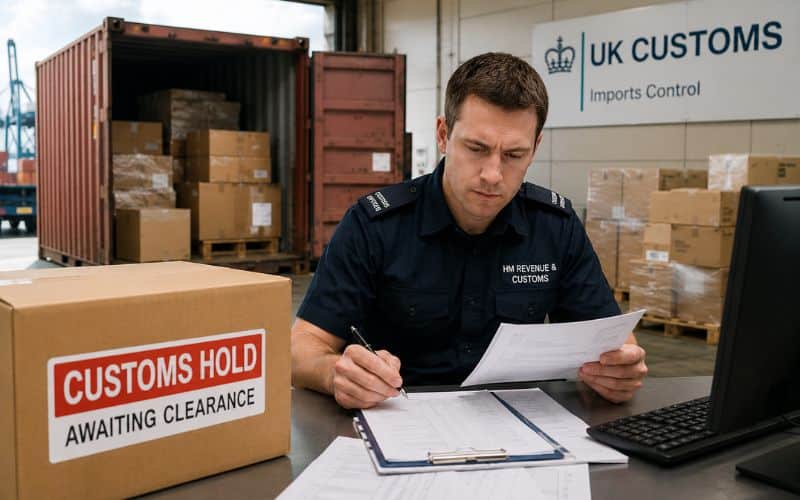
Most customs problems come from an inventory that doesn’t match the container, not from anyone trying to sneak something through. Your inventory tells HMRC and Border Force what they should find inside, and every gap between the list and the boxes is a reason to look closer.
The most expensive mistake is a missing reference number. If a valid ToR reference can’t be quoted on the import declaration, HMRC says you may be billed for import duties and administration charges on your belongings. You can still claim the relief late and apply for a refund, but that money sits with HMRC in the meantime, usually during the months when a new household needs it most.
Vague descriptions come next. “Garage stuff” or “misc kitchen” gives an officer no way to confirm what’s inside, and an unexplained box is the kind that gets opened. If your container is held for inspection, storage charges can build up while it waits, and any prohibited item found inside is seized. None of this is dramatic when the list is right. It just becomes slow and costly when it isn’t.
That’s why SDC builds the inventory with you rather than handing you a blank form, and why our crews flag questionable items while they’re still in your house. You can learn more about how international moving to the UK works with SDC, from the first survey to delivery. If you have a garage full of maybes, call us at (888) 909-3020 and go through them with a coordinator before a single box is sealed. It’s a much better conversation to have now than at the port.
Frequently Asked Questions
Can I ship food to the UK from the USA?
Some, but not the food people usually want to bring. Meat, cheese, milk, and other dairy products from the US are banned, and so is pet food unless it’s medically necessary. Bread, biscuits, chocolate, pasta without meat, and packaged soups and seasonings are allowed. In practice, most families skip food entirely, since it rarely survives weeks at sea in good shape.
Do I have to pay tax on my belongings when I move to the UK?
Usually not. If you’ve lived outside the UK for at least 12 consecutive months and you’ve owned and used your belongings for at least six months, Transfer of Residence relief lets them in free of import duty and VAT. You need HMRC approval through the ToR1 form before your goods arrive. Alcohol, tobacco, and anything bought within six months of the move still attract duty and VAT.
Can I pack prescription medications in my household shipment?
No, keep them with you. Medicines containing controlled drugs must be carried on your person, up to three months’ supply, with a letter from your prescriber. Anything shipped or posted separately, or anything over three months’ supply, will be taken away. Carry your medicines in your hand luggage and set up a UK prescription soon after you arrive.
What happens if I accidentally ship something that isn’t allowed in the UK?
Border Force can seize it, and the rest of your shipment may be held while the container is inspected, which adds delay and storage charges. For honest mistakes with things like food or plant material, losing the item is the usual outcome. Weapons and controlled drugs are treated far more seriously. A careful inventory and a pre-pack walk-through with your moving company prevent nearly all of it.